Extracorporeal shock wave therapy (ESWT)
A non-invasive acoustic-energy treatment that stimulates healing in chronic tendon and bone conditions — no needles, performed in our clinic.
What It Is
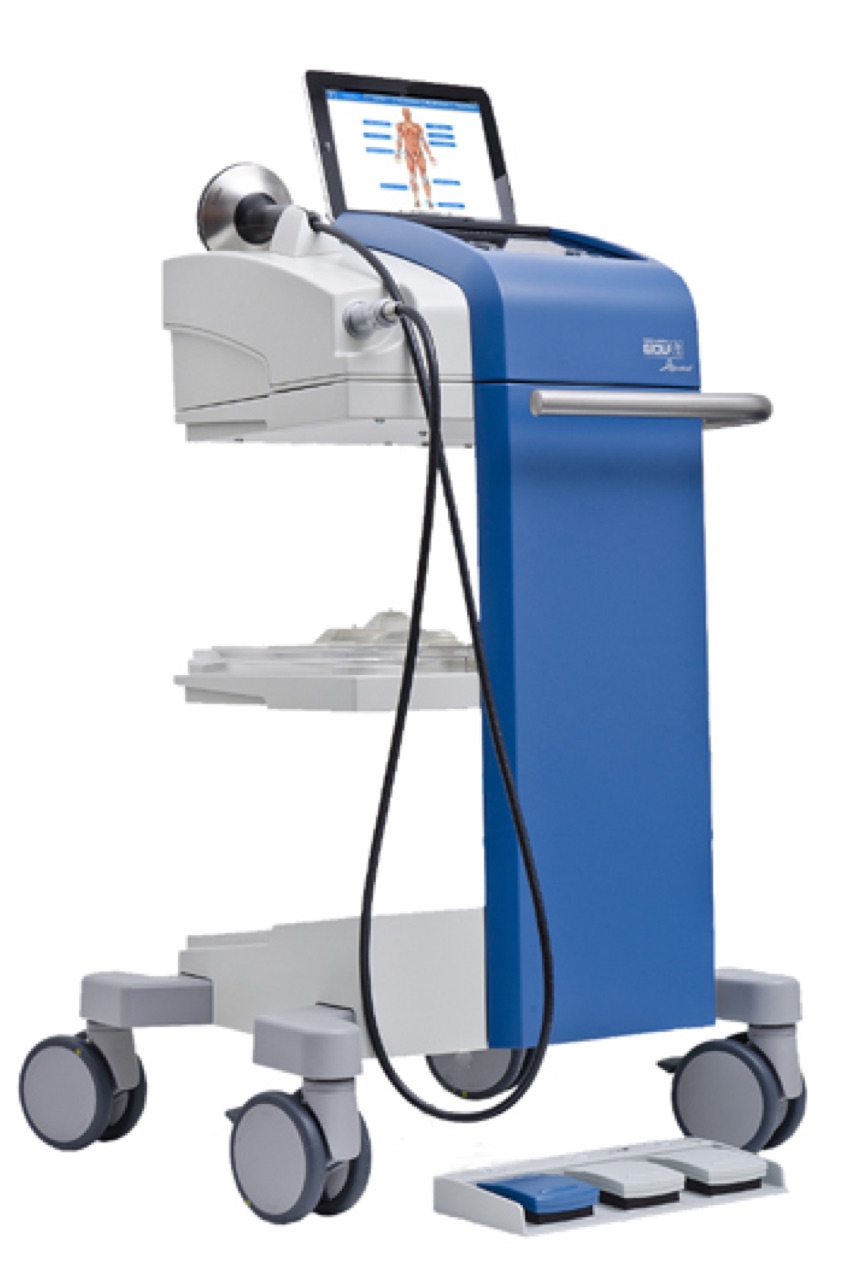
Extracorporeal shock wave therapy (ESWT) uses focused sound waves to deliver acoustic energy to damaged tendon and bone tissue. The shockwaves are generated outside the body and transmitted through the skin to the target area. This mechanical stimulus appears to reduce pain, promote blood flow, and encourage tissue healing. The treatment is non-surgical, requires no anesthesia, and is performed in the clinic as an outpatient procedure.
ESWT is particularly effective for chronic tendon conditions that have plateaued with conservative care. Unlike surgical approaches, it carries minimal risk of infection or tissue damage, making it attractive for patients who want to avoid the operating room but need more aggressive treatment than injections alone.
Evidence and Typical Results
The evidence for ESWT varies by condition:
- Plantar fasciitis: Well-established effectiveness. Most patients report meaningful relief; many become pain-free after a short course of treatment.
- Achilles tendinopathy: Strong evidence, especially for mid-portion tendon pain. Good success in athletes and active patients.
- Calcific rotator cuff tendinopathy: Excellent evidence. ESWT can fragment calcium deposits and resolve related pain, often avoiding surgery altogether.
- Tennis elbow (lateral epicondylitis) (tennis elbow): Good to very good evidence. Particularly helpful when corticosteroid or physical therapy alone haven't worked.
- Other tendinopathies: Evidence is weaker. Benefit for other sites (medial epicondylitis, patellar tendinopathy, rotator cuff tendinopathy without calcification) is less certain.
Overall, ESWT succeeds in roughly 60–80% of appropriate candidates, depending on the condition treated and the quality of imaging-guided targeting. Improvement typically emerges over weeks to months, as the tissue remodels in response to the acoustic stimulus.
Conditions We Treat with ESWT
Plantar fasciitis
Chronic heel and arch pain that has not resolved with stretching, orthotics, or injections.
Achilles tendinopathy
Mid-portion and insertional Achilles pain in athletes and active patients after eccentric loading and therapy.
Calcific rotator cuff tendinopathy
Chronic rotator cuff pain with calcium deposits. ESWT fragments the calcium and relieves symptoms.
Tennis elbow (lateral epicondylitis)
Chronic outer-elbow tendon pain unresponsive to brace, therapy, or cortisone injection.
What to Expect in Clinic
- The procedure typically lasts 10–15 minutes per session, performed without anesthesia (though local numbing cream can be applied for comfort).
- You will lie still while a probe is held firmly against the skin over the target tendon or bone. Ultrasound may be used to guide the placement precisely.
- You will feel a series of impacts or vibrations — often described as a tapping or thumping sensation. Some discomfort is normal; it should not be severe.
- A typical course is 3–5 sessions, spaced 1–2 weeks apart. Your provider will tailor the schedule to your condition.
- Mild soreness and bruising at the treatment site are common and usually settle within a few days.
- You may resume most daily activities immediately. Heavy loading of the treated area is often limited for a brief period to allow initial healing.
Recovery and Improvement Timeline
ESWT does not produce immediate relief. Pain improvement typically emerges gradually over 2–8 weeks as the tissue remodels. Some patients feel better within days; others require the full course before noticing change. Your provider will assess progress at follow-up visits and determine whether additional sessions are beneficial.
Because tissue healing is ongoing, continued improvement may be seen for several months after treatment ends.
When ESWT Is Not Recommended
- Active infection near the treatment site.
- Certain blood-thinning medications or bleeding disorders (relative contraindication; discuss with your provider).
- Pregnancy.
- Inability to remain still during the procedure.
- Recent corticosteroid injection (typically wait 2–4 weeks to allow the steroid effect to wear off).
Risks and Side Effects
- Temporary soreness, swelling, or bruising at the treatment site — expected and self-limited.
- Temporary increased pain in the first few days after treatment — some patients experience a brief flare before improvement.
- Very rare: minor skin irritation or nerve irritation if the probe contacts sensitive structures nearby.
- No benefit: as with any treatment, ESWT does not help every patient. If no improvement is seen after a full course, surgical options may be discussed.
Insurance and Cost
Insurance coverage for ESWT is variable and depends on the indication and your plan. Some carriers cover it for specific conditions (e.g., plantar fasciitis, calcific tendinopathy) while others do not. We will check your coverage in advance. If not covered, self-pay pricing is available upon request.
Next Steps
ESWT is most useful when the diagnosis is clear, conservative measures have been exhausted, and imaging confirms the target pathology. Request an appointment or call (830) 625-0009 to discuss whether ESWT is appropriate for your condition.