

Overview
The distal radius is the most commonly fractured bone in the adult skeleton. When the fracture is displaced, unstable, or extends into the wrist joint surface, casting alone will not hold alignment. Surgical fixation restores the bone's length, its angle, and a smooth joint surface. All three matter for long-term wrist function and for how the wrist looks.
How the Procedure Works
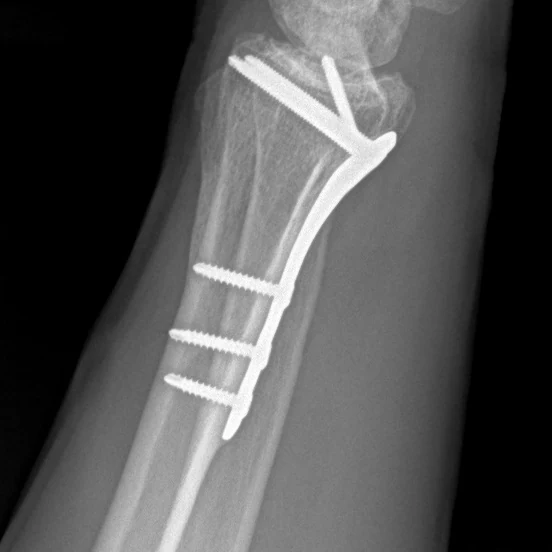
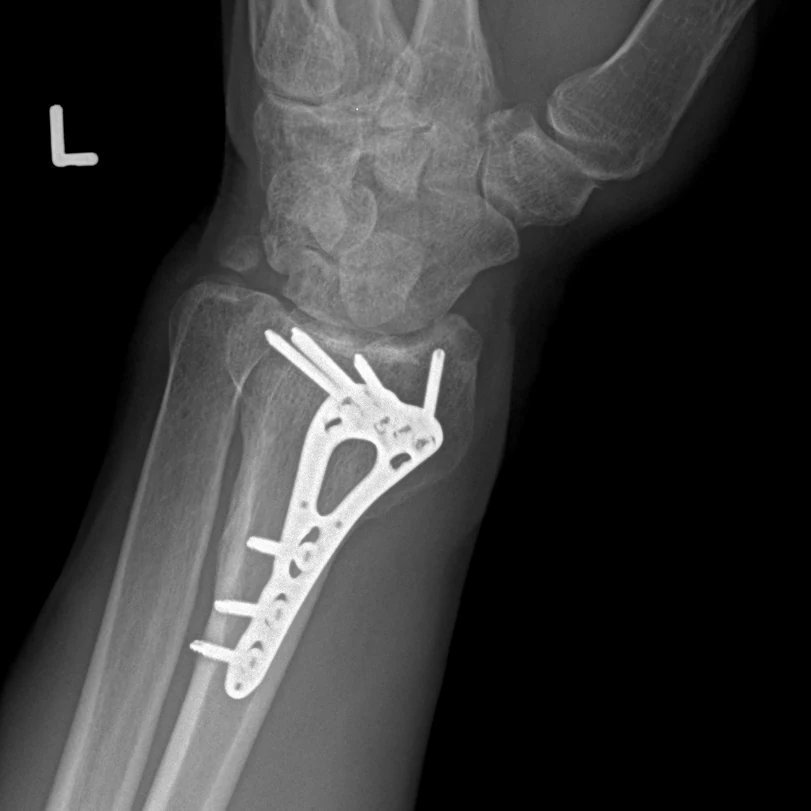
We work through an incision on the palm side of the wrist. This gives direct access to the fracture while keeping the tendons and nerves on the back of the wrist out of harm's way. The fracture is set under live X-ray. We restore the bone's length and its natural angles to closely match the uninjured side. That precision matters because even a small step left in the joint surface speeds up wrist arthritis.
A shaped locking plate sits against the palm-side surface of the bone. Locked screws near the joint hold the broken pieces in position from below, supporting the joint surface the way scaffolding supports a ceiling. Live X-ray from several angles confirms each screw is the right length. A screw that pokes past the far side of the bone can irritate the tendons there, a known complication avoided by careful imaging during surgery. Rigid fixation means you can start wrist motion early rather than spending an extended period in a cast.
When to Consider Distal Radius ORIF
Distal radius ORIF is generally offered when symptoms, imaging, and a trial of non-operative care together point to surgery as the next step. The typical picture includes:
Displaced or unstable fracture
A fracture that has shortened, tilted, or shifted too far, or one likely to do so in a cast.
Break into the joint surface
A fracture that crosses into the wrist joint with a step that must be set back in place to protect long-term function.
Active patients
Patients who need an early return of wrist function for work or activity.
Treats: Distal Radius Fracture
Weight-Bearing After Repair
Controlled load is part of how bone heals. Once the fracture is stabilized with hardware, gentle weight through the limb stimulates the biology that builds new bone. Taking all load off a fixed fracture for too long can actually slow healing and stiffen the joints above and below. Full body weight right away, however, can overload the hardware before the bone has caught up. The right answer sits in between. Your surgeon sets a step-by-step weight-bearing plan based on your fracture pattern, the strength of the fixation, your bone quality, and how the repair looks on post-op imaging. We tell you exactly how much weight the limb can take, when to advance, and what to watch for.
Risks & Why We Still Recommend It
Every operation carries risk. This procedure is offered because the condition, when left untreated, can cause a wrist that heals out of line, with weak grip, limited motion, and early wrist arthritis. The decision to proceed weighs the risks of surgery against the limitations the condition places on daily function. Surgery does not remove risk; it addresses a problem that is otherwise progressive. Whether it is appropriate is determined for each patient in consultation with the surgeon.
Before this surgery, we go over the following risks with you:
- bleeding and infection
- anesthesia risk
- stiffness
- irritation or rupture of a nearby tendon if a screw or the plate sits too high (most often a thumb tendon)
- irritation of the median nerve, or carpal tunnel syndrome
- complex regional pain syndrome, a lasting pain-and-swelling reaction that is uncommon but more often seen with wrist fractures
- the bone shifting out of position before it heals
We proceed when a displaced distal radius fracture cannot be held reliably in a cast. If this operation is not right for your situation, we will not recommend it.
Frequently Asked
questions we hear in clinicDo all broken wrists need surgery?
No. Surgery is offered when the fracture is displaced, unstable, or extends into the wrist joint surface, when it has shortened, tilted, or shifted beyond acceptable limits or is likely to do so in a cast, or when an active patient needs an early return of wrist function for work or activity.
Why won't a cast hold it?
When the fracture is displaced or unstable, casting alone will not hold alignment. Left to heal out of line, the wrist develops weak grip, limited motion, and early wrist arthritis. Fixation restores the bone's length, its angle, and a smooth joint surface, and all three matter for long-term function.
Why is the incision on the palm side of the wrist?
Working from the palm side gives direct access to the fracture while keeping the tendons and nerves on the back of the wrist out of harm's way. The shaped locking plate then sits against the palm-side surface of the bone.
Will I be stuck in a cast afterward?
Rigid fixation is the point: the plate and locked screws hold the pieces firmly enough that you can start wrist motion early rather than spending an extended period in a cast.
How do you make sure the screws are the right length?
Live X-ray from several angles during surgery confirms each screw. A screw that pokes past the far side of the bone can irritate the tendons there, a known complication avoided by careful imaging during the operation.
What are the main risks?
Bleeding and infection, anesthesia risk, stiffness, irritation or rupture of a nearby tendon if a screw or the plate sits too high, irritation of the median nerve or carpal tunnel syndrome, complex regional pain syndrome (a lasting pain-and-swelling reaction that is uncommon but more often seen with wrist fractures), and the bone shifting out of position before it heals. The full picture is in the Risks section above.
Further Reading
External patient-education references and related OSI pages for additional background: